
The energy at FinovateFall 2025 was unmatched, and Zoot was proud to be part of it. From meaningful conversations at our booth to engaging sessions across the event, the week was full of fresh ideas and exciting discussions about the future of financial technology.
Beyond the buzz of the show floor, a few clear themes emerged that signal where the industry is headed next. Here are the insights that stood out most to our team at FinovateFall 2025:
Fraud Across the Lifecycle
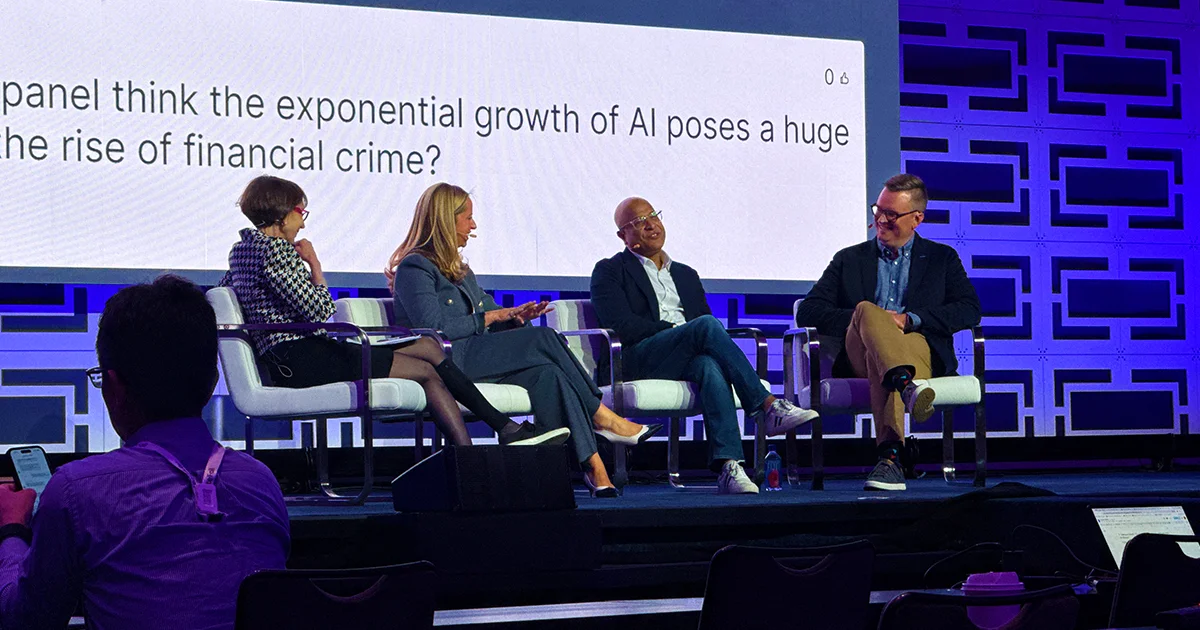
Fraud prevention was front and center at FinovateFall 2025, with financial institutions looking for smarter, more connected strategies to stay ahead of increasingly sophisticated threats. However, the focus wasn’t only on prevention: from intake to triage, decisioning, and customer communication, automation is streamlining every stage of the dispute lifecycle. By reducing manual touchpoints and orchestrating the right data more effectively, financial institutions can resolve disputes much faster through automation and predictive scoring.
Solutions across the industry are being judged not just on defense but on how friction can be minimized while remaining compliant. Effective onboarding, transparency, and maintaining consumer trust are imperative.
“It’s not just about stopping fraud anymore. It’s about automating the entire lifecycle. Intake, triage, communication, resolution. It’s all being rethought to move faster, reduce friction, and scale the effort.”
Casey Ferguson
Zoot VP of Marketing
Use Cases for AI Expanding Across the Fintech Landscape
AI is everywhere, and as its capabilities continue to grow, its presence in both business and our everyday lives is unlikely to slow down any time soon. The real question is how to make it work. With so many powerful AI tools available, the most important discussion becomes how to best plug it into your systems and leverage its full potential. Effective orchestration is key, and modular tools with interoperable layers and low-code workflows make all the difference. Numerous financial institutions are now leveraging AI/ML for predictive work, hyper-targeting, personalization, and behavioral analytics.
A recent article highlighted the importance of foundational readiness for AI. This begins with assessing a financial institution’s data posture to ensure the data is structured and reliable enough to support this kind of use within a workflow. Other key steps could include pilots, iterations, and establishing solid AI governance at your organization to deliver the framework safely and at scale. While AI cannot act as a full replacement for existing processes, it can be extremely impactful augmenting existing decisioning processes for alignment with regulatory standards and customer trust.
Shared Roadmaps Lead to Smarter Risk Management
Risk, compliance, and customer experience teams can no longer operate in silos – they must share a unified roadmap. Financial institutions are under pressure to protect revenue while staying compliant and keeping their customers and members satisfied. Leading teams are mapping risk and decision points across the entire customer journey, rather than reacting only when issues surface downstream.
By layering in automation and data orchestration, FIs can proactively manage compliance checks, streamline decisioning, and ensure consistency at every touchpoint across the portfolio. This not only reduces friction and costs, but also creates a stronger foundation for sustainable growth and customer trust.
Phased Modernization for Smarter Workflows and Better Outcomes
Some of the most prominent conversations at FinovateFall 2025 revolved around effective modernization. Financial institutions are taking a phased approach to modernization, using tools based on low-code and no-code architecture to integrate new capabilities without replacing core systems. By orchestrating multiple providers and data sources across workflows, they’re consolidating processes, reducing manual work, and breaking down internal silos between business, tech, compliance, and growth teams.
This approach allows institutions to move faster, respond more effectively to changing risks, and deliver a smoother experience for customers. Orchestrating fraud, identity, and data workflows in a unified way not only reduces operational drag but also creates a foundation for smarter decision making across the organization. By aligning internal teams around these modernized processes, financial institutions can innovate confidently with faster time to revenue.
For banks looking to take the next step, Zoot’s modernization guide offers practical strategies for integrating new capabilities, orchestrating multiple systems, and aligning teams – without the disruption of a full rip-and-replace.
“Time-to-value is the new expectation: across fraud, onboarding, and personalization, there’s a shift: deliver meaningful impact quickly without throwing everything out.”
Casey Ferguson
Zoot VP of Marketing
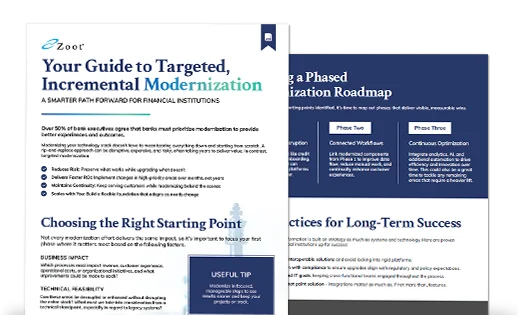
Download Your Guide to Targeted, Incremental Modernization
Zoot’s modernization guide shows how financial institutions can transform outdated technology stacks into agile, future-ready ecosystems.
Looking Ahead
FinovateFall 2025 reinforced that the future of financial services is all about connected systems, smarter workflows, and aligned teams. Zoot helps financial institutions simplify complexity, orchestrate data, and modernize processes for stronger, sustainable growth.
Ready to see how Zoot can transform your workflows and accelerate growth?
Explore our solutions and reach out to our team today.